
Sports medicine · The knee
Anterior Cruciate Ligament (ACL) Tear: understanding, prevention and recovery
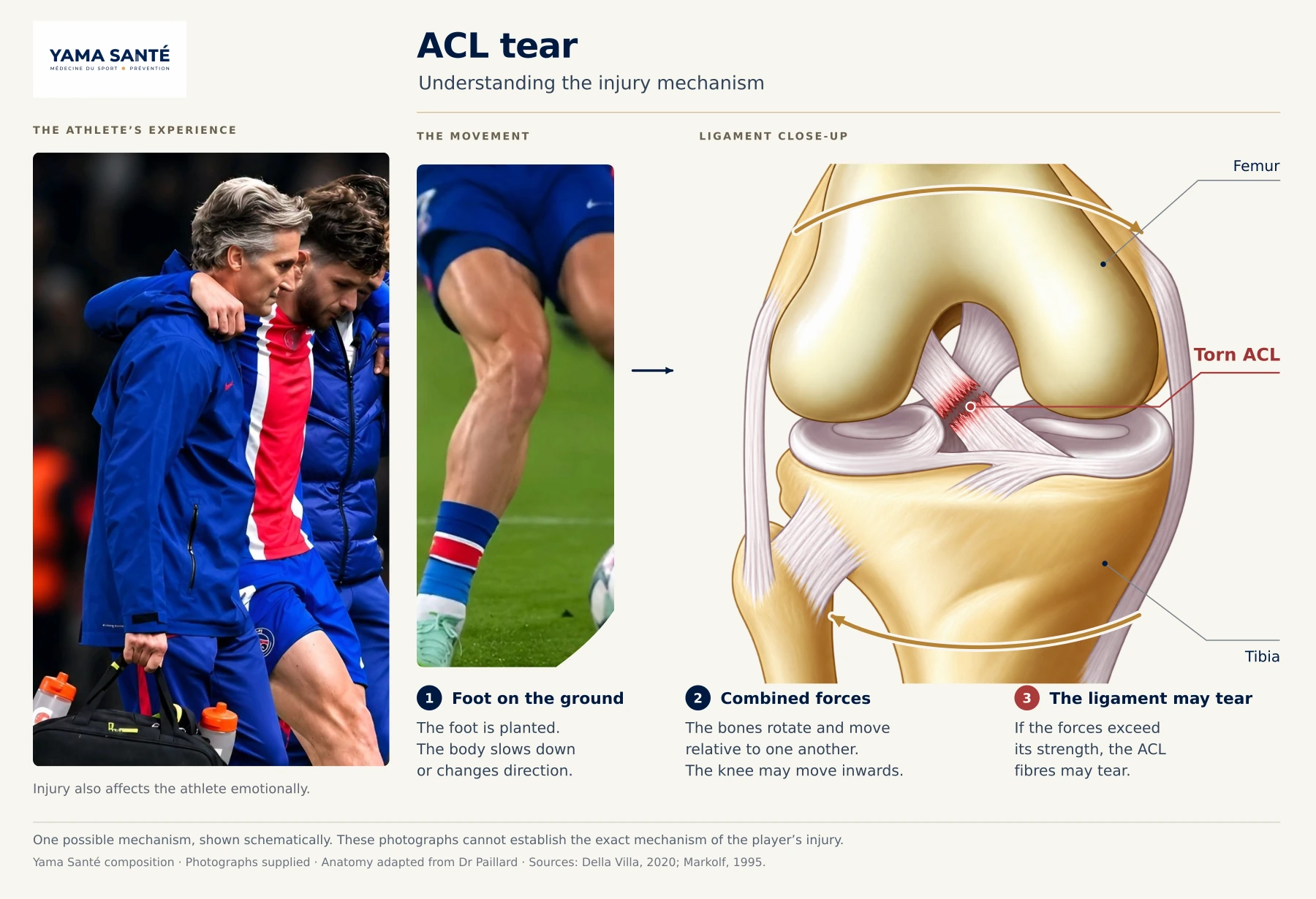 Enlarge image
What does the anterior cruciate ligament (ACL) do? Can the risk of a tear be reduced? Is surgery always needed? To answer these questions, we need to understand the role of the ligament, but also that of the muscles, rehabilitation and time.
On 21 October 2026, following the Champions League match between Paris Saint-Germain and FC Barcelona, PSG announced that Khvicha Kvaratskhelia had torn the anterior cruciate ligament in his right knee. [1]
This injury regularly makes the headlines in professional sport. It naturally raises some very practical questions: “What does this injury involve?”, “How can I prevent this injury or a recurrence?”, “Will I be able to play again?”, “How can I recover well?”… The answers are complex and do not depend solely on the MRI findings.
What is this ligament?
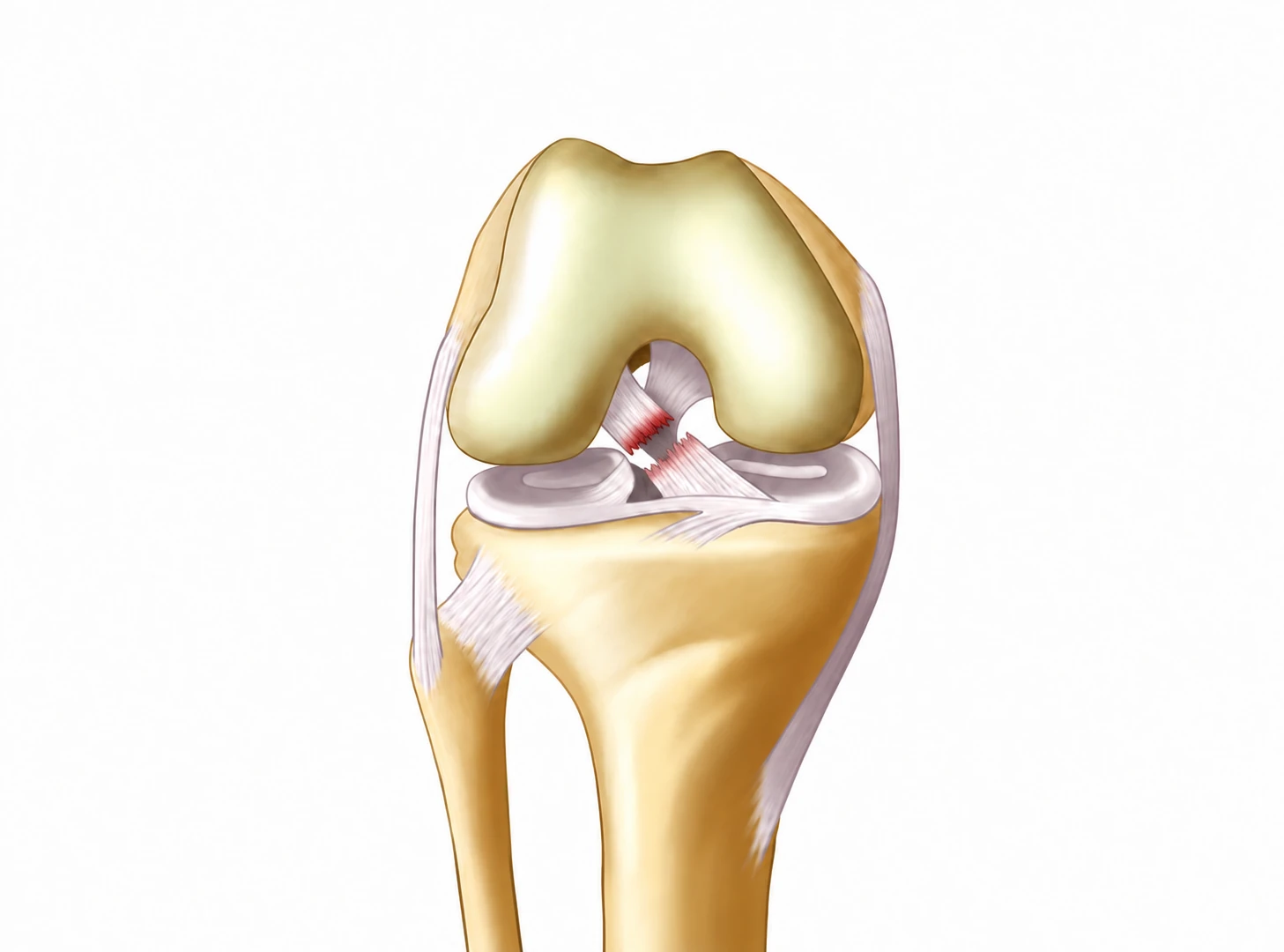
The anterior cruciate ligament, or ACL, is a structure in the centre of the knee that connects the femur to the tibia (see the image). It crosses the posterior cruciate ligament (PCL). An ACL tear can be partial or complete and may or may not be accompanied by a PCL injury. [2,3]
What does the ACL do?
The ACL limits forward movement of the tibia relative to the femur (when straightening the leg, for example) and helps control rotation. This mechanism is very important when slowing down, changing direction or landing after a jump. The collateral ligaments, menisci and muscles complete the knee’s stabilising system. [2,3]
The ligament contains nerve endings that transmit some of the sensory information used to control the joint. [2,4]
Yama Santé · Anatomy
Inside the knee
Compare the ACL states, then explore the structures of the knee.
Continuous fibres that contribute to knee stability.
Anterior view · knee flexed
Intact ACL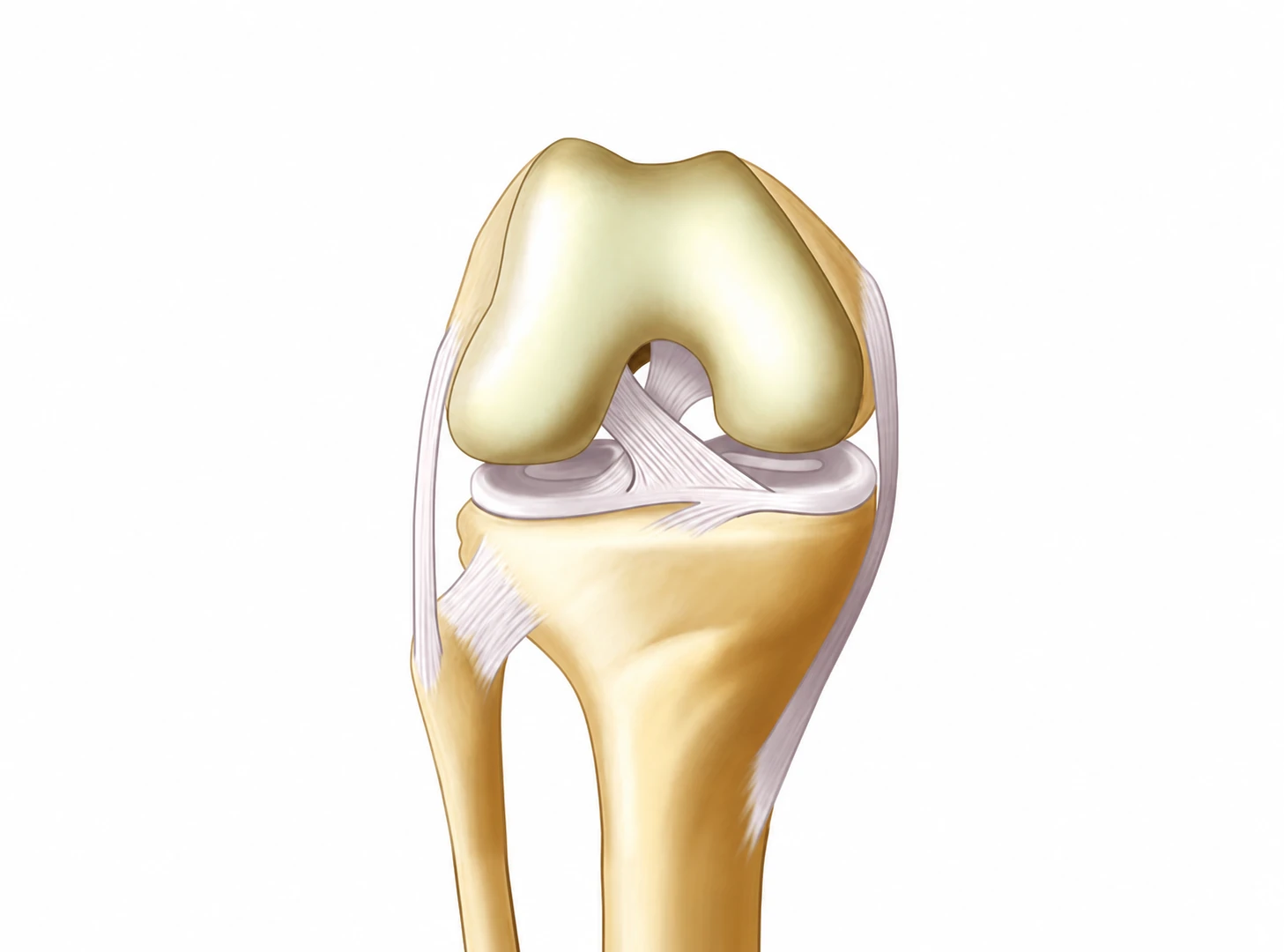
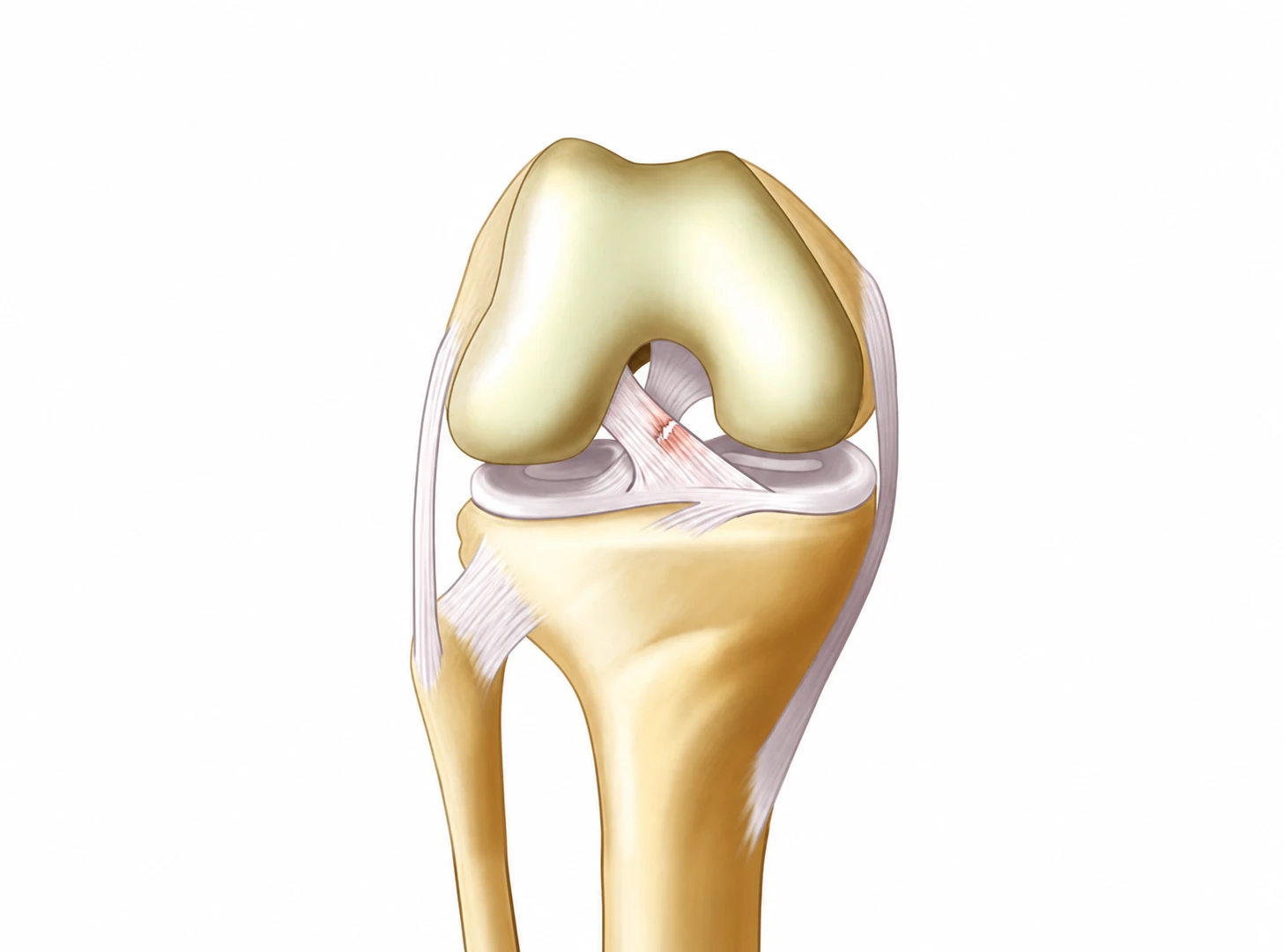
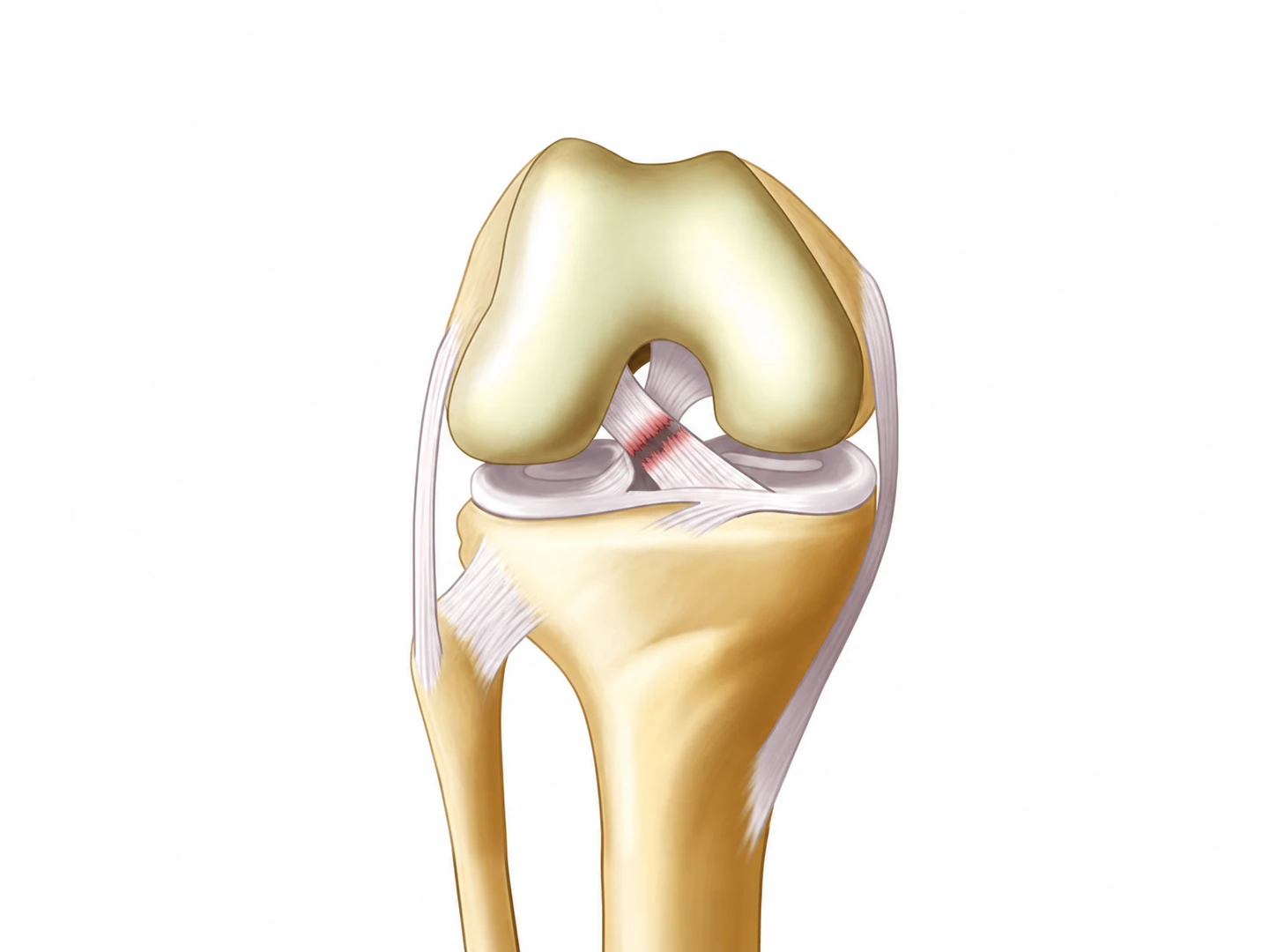
The illustration could not be displayed.
Partial or complete tear: what is the difference?
It is quite simple, as the diagram shows: in a partial tear, some of the fibres remain continuous. In a complete tear, the continuity of the ligament is interrupted.
How does it tear?
The ligament gives way when the forces exceed its strength. This can happen when it is put under strain (changing foot placement, slowing down, landing…) or following a direct blow to the knee. Contact with another player can also contribute to a loss of balance during an accident. [6,7]
The mechanism is often complex and involves several movements. The key point is that a ligament tear cannot be reduced to a single “wrong move”. [6]
Reducing the risk
Risk can be reduced, but not eliminated. The prevention programmes studied combine several exercises, including muscle strengthening and work on the quality of jumps and landings. [10,11]
A meta-analysis of 18 studies involving more than 27,000 female athletes found that some programmes reduced the risk of injury by about half. These findings concern complete programmes in the female athletes studied. At present, they do not allow firm conclusions about applying these programmes more widely, but they offer useful indications. [10]
What do these programmes work on?
The aim is to improve neuromuscular control. We want to improve the ability to coordinate muscles and foot placement. The idea is to gain better control of movement and impact absorption, or to react better during play. [11]
The exercises can focus on 3 main principles:
- Strengthening the lower limbs (especially the hamstrings and calves) [10];
- Controlling landings (jumping, absorbing impact, stabilising, then progressing to increasingly demanding situations) [10,11];
- Controlling the body and foot placement (trunk and pelvis work, slowing down, changes of direction, balance) [11,12];
Making prevention part of training
Structured programmes, such as Knäkontroll or PEP, provide a framework for organising these exercises. Their content, frequency and progression are adapted to the sport and the participants. [9,11,12]
The expected benefit depends on repeated practice using programmes that have been studied. [10,11]
Is surgery always needed?
No. Clinical assessment (knee stability, episodes of giving way), imaging, medical history, occupation and the desired activity level may all influence the decision about surgery. Each surgical procedure must be tailored to the individual patient and follow an appropriate discussion with an orthopaedic surgeon. Physical activities such as walking, cycling and contact sports place different demands on the knee. Age and growth may also matter. [14–17]
The main ACL operations
ACL reconstruction, also known as ligamentoplasty, is usually performed arthroscopically. A tendon replaces the damaged ligament. This most often comes from the patient’s own body, as an autograft. [14,32]
Three main options for harvesting a graft
- Hamstring tendons: DIDT or DT4 [19,34]
- Patellar tendon (below the kneecap) [14,32]
- Quadriceps tendon (above the kneecap). [19]
The orthopaedic surgeon also checks for meniscal injuries and aims to preserve the meniscus. A meniscal repair may change the rehabilitation programme. Every operation carries risks that should be discussed during the consultation with the orthopaedic surgeon. [14,32]
How do you recover after an ACL tear?
Recovery begins with simple goals: reducing swelling, regaining movement, improving walking and reactivating the muscles. Rehabilitation needs to be structured, with or without surgery. Associated injuries and the knee’s progress may change how rehabilitation proceeds. [15,16,22,23]
The stages of rehabilitation
Progression depends on the individual and their goals. Pain, swelling and the knee’s response after sessions provide guidance. The stages overlap and their duration varies. [23,35]
Regaining knee movement and bearing weight comfortably
Initially, the aim is to regain movement, especially straightening the knee. After an injury or operation, it can be difficult to contract the quadriceps. Exercises are gradually adapted. [22,23]
Rebuilding strength, endurance and balance
Strength training then progresses gradually and should be accompanied by work on endurance and, often, on restoring good balance. [23,35]
Returning to running, then to sporting movements
Exercises are performed under load. [25,35]
For athletes: returning to training, then competition
The activity itself is resumed gradually, with adapted sessions. Regaining performance is a separate stage. Preparation continues beyond the first training sessions. [25]
When surgery is planned, preoperative preparation is an option. A randomised trial found that a preoperative programme improved some functional outcomes after reconstruction. This is not always necessary and must not delay an important operation. [24]
In the longer term
The aim is to return to a satisfying level of activity and maintain a functional knee over time. Reconstruction does not guarantee a return to the same sporting level or the absence of osteoarthritis. Long-term results from the KANON study show that osteoarthritic changes can develop following both treatment strategies. [15]
Common questions after an ACL tear
Can you walk with a torn anterior cruciate ligament?
Yes, some people can walk once the painful phase has passed. That alone does not establish that the knee is stable enough to run or pivot. Returning to activity depends on the medical assessment and the activities being considered. [7,32]
Is a partial tear necessarily less serious?
As is often the case in medicine, we place great importance on the patient’s symptoms. Discomfort, feelings of instability and clinical examination findings matter more than the word “partial” on the report. [5]
Is rehabilitation useful if I am going to have surgery?
Sometimes. Before the operation, it can help improve knee movement and function. Afterwards, it supports the recovery of strength and the return to activities. Its content also depends on the graft and any additional procedures, particularly those involving the meniscus. [22,24]
Can a knee brace replace rehabilitation?
No. A brace may be indicated, but it cannot replace regaining strength and control of the knee. [14]
References
View all 36 references
- [1]
Paris Saint-Germain. Medical update after Barcelona. 21 October 2026. View source
Source for the sporting case mentioned in the introduction; no return-to-play timeframe was announced in the statement.
- [2]
Duthon VB, Barea C, Abrassart S, Fasel JH, Fritschy D, Ménétrey J. Anatomy of the anterior cruciate ligament. Knee Surg Sports Traumatol Arthrosc. 2006;14(3):204–213. View source
Key review of the attachments, bundles and structure of the ACL.
- [3]
Girgis FG, Marshall JL, Monajem A. The cruciate ligaments of the knee joint. Anatomical, functional and experimental analysis. Clin Orthop Relat Res. 1975;(106):216–231. View source
Historical anatomical and experimental study of the functions of the cruciate ligaments.
- [4]
Schutte MJ, Dabezies EJ, Zimny ML, Happel LT. Neural anatomy of the human anterior cruciate ligament. J Bone Joint Surg Am. 1987;69(2):243–247. View source
Histological study of the nerve endings and mechanoreceptors of the ACL.
- [5]
Stone AV, Marx S, Conley CW. Management of Partial Tears of the Anterior Cruciate Ligament: A Review of the Anatomy, Diagnosis, and Treatment. J Am Acad Orthop Surg. 2021;29(2):60–70. View source
Clinical review: partial tears also require functional assessment.
- [6]
Della Villa F, Stride M, Bortolami A, Williams A, Davison M, Buckthorpe M. Systematic Video Analysis of ACL Injuries in Male Professional English Soccer Players: A Study of 124 Cases. Orthop J Sports Med. 2025;13(2):23259671251314642. View source
Video analysis of 124 injuries in male professional footballers; limited generalisability.
- [7]
American Academy of Orthopaedic Surgeons. Anterior Cruciate Ligament (ACL) Injuries. OrthoInfo. Accessed 22 October 2026. View source
Patient information on anatomy, symptoms and diagnosis.
- [8]
Sokal PA, Norris R, Maddox TW, Oldershaw RA. The diagnostic accuracy of clinical tests for anterior cruciate ligament tears are comparable but the Lachman test has been previously overestimated: a systematic review and meta-analysis. Knee Surg Sports Traumatol Arthrosc. 2022;30(10):3287–3303. View source
Review of the diagnostic accuracy of clinical tests; no single test is perfect.
- [9]
Waldén M, Atroshi I, Magnusson H, Wagner P, Hägglund M. Prevention of acute knee injuries in adolescent female football players: cluster randomised controlled trial. BMJ. 2012;344:e3042. View source
Trial randomised by team in 4,564 female footballers: a 15-minute programme twice a week; 21 tears observed.
- [10]
Petushek EJ, Sugimoto D, Stoolmiller M, Smith G, Myer GD. Evidence-Based Best-Practice Guidelines for Preventing Anterior Cruciate Ligament Injuries in Young Female Athletes: A Systematic Review and Meta-analysis. Am J Sports Med. 2019;47(7):1744–1753. View source
Review of programmes for young female athletes; components and conditions for implementation.
- [11]
Arundale AJH, Bizzini M, Dix C, Giordano A, Kelly R, Logerstedt DS, Mandelbaum B, Scalzitti DA, Silvers-Granelli H, Snyder-Mackler L. Exercise-Based Knee and Anterior Cruciate Ligament Injury Prevention. J Orthop Sports Phys Ther. 2023;53(1):CPG1–CPG34. View source
Professional guidelines on exercise-based prevention programmes.
- [12]
Gilchrist J, Mandelbaum BR, Melancon H, Ryan GW, Silvers HJ, Griffin LY, Watanabe DS, Dick RW, Dvorak J. A randomized controlled trial to prevent noncontact anterior cruciate ligament injury in female collegiate soccer players. Am J Sports Med. 2008;36(8):1476–1483. View source
Trial in female university footballers; the estimated effect on non-contact ACL injuries was statistically uncertain.
- [13]
Krosshaug T, Steffen K, Kristianslund E, Nilstad A, Mok KM, Myklebust G, Andersen TE, Holme I, Engebretsen L, Bahr R. The Vertical Drop Jump Is a Poor Screening Test for ACL Injuries in Female Elite Soccer and Handball Players: A Prospective Cohort Study of 710 Athletes. Am J Sports Med. 2016;44(4):874–883. View source
Prospective cohort: limitations of a jump-landing test for predicting an individual injury.
- [14]
American Academy of Orthopaedic Surgeons. Management of Anterior Cruciate Ligament Injuries. Evidence-Based Clinical Practice Guideline. 22 August 2022. View source
Professional guideline on management, grafts, the meniscus and braces.
- [15]
Lohmander LS, Roemer FW, Frobell RB, Roos EM. Treatment for Acute Anterior Cruciate Ligament Tear in Young Active Adults. NEJM Evid. 2023;2(8):EVIDoa2200287. View source
KANON follow-up at 11 years: rehabilitation with early reconstruction or the option of delayed reconstruction.
- [16]
Reijman M, Eggerding V, van Es E, et al. Early surgical reconstruction versus rehabilitation with elective delayed reconstruction for patients with anterior cruciate ligament rupture: COMPARE randomised controlled trial. BMJ. 2021;372:n375. View source
COMPARE: two strategies after a recent tear; about half of the initial rehabilitation group had undergone surgery by two years.
- [17]
Beard DJ, Davies L, Cook JA, et al.; ACL SNNAP Study Group. Rehabilitation versus surgical reconstruction for non-acute anterior cruciate ligament injury (ACL SNNAP): a pragmatic randomised controlled trial. Lancet. 2022;400(10352):605-615. View source
ACL SNNAP: non-acute injury with symptomatic instability; a different population from KANON and COMPARE.
- [18]
Getgood AMJ, Bryant DM, Litchfield R, et al. Lateral Extra-articular Tenodesis Reduces Failure of Hamstring Tendon Autograft Anterior Cruciate Ligament Reconstruction: 2-Year Outcomes From the STABILITY Study Randomized Clinical Trial. Am J Sports Med. 2020;48(2):285–297. View source
Trial of lateral reinforcement in selected high-risk patients aged 14 to 25.
- [19]
Ebert JR, Calvert ND, Radic R. A Prospective Randomized Controlled Trial Investigating Quadriceps Versus Hamstring Tendon Autograft in Anterior Cruciate Ligament Reconstruction. Am J Sports Med. 2024;52(3). View source
Randomised trial: different strength recovery profiles depending on the tendon harvested.
- [20]
DiFelice GS, Villegas C, Taylor S. Anterior Cruciate Ligament Preservation: Early Results of a Novel Arthroscopic Technique for Suture Anchor Primary Anterior Cruciate Ligament Repair. Arthroscopy. 2015;31(11):2162–2171. View source
Small series of primary repairs, limited to proximal injuries with good-quality tissue.
- [21]
Murray MM, Fleming BC, Badger GJ, et al. Bridge-Enhanced Anterior Cruciate Ligament Repair Is Not Inferior to Autograft Anterior Cruciate Ligament Reconstruction at 2 Years: Results of a Prospective Randomized Clinical Trial. Am J Sports Med. 2020;48(6):1305–1315. View source
BEAR: a non-inferiority trial at two years, with specific criteria; no inference about availability in France.
- [22]
Kotsifaki R, Korakakis V, King E, et al. Aspetar clinical practice guideline on rehabilitation after anterior cruciate ligament reconstruction. Br J Sports Med. 2023;57(9):500-514. View source
Aspetar guidelines after reconstruction; progression, exercises and return criteria.
- [23]
Culvenor AG, Girdwood MA, Juhl CB, Patterson BE, Haberfield MJ, Holm PM, et al. Rehabilitation after anterior cruciate ligament and meniscal injuries: a best-evidence synthesis of systematic reviews for the OPTIKNEE consensus. Br J Sports Med. 2022;56(24):1445-1453. View source
Synthesis for OPTIKNEE on rehabilitation after ACL and meniscal injuries.
- [24]
Shaarani SR, O’Hare C, Quinn A, Moyna N, Moran R, O’Byrne JM. Effect of prehabilitation on the outcome of anterior cruciate ligament reconstruction. Am J Sports Med. 2013;41(9):2117-2127. View source
Randomised trial on the effects of physical preparation before reconstruction.
- [25]
Meredith SJ, Rauer T, Chmielewski TL, et al.; Panther Symposium ACL Injury Return to Sport Consensus Group. Return to sport after anterior cruciate ligament injury: Panther Symposium ACL Injury Return to Sport Consensus Group. Knee Surg Sports Traumatol Arthrosc. 2020;28(8):2403-2414. View source
Panther consensus: distinguishing participation, return to sport and return to performance.
- [26]
Grindem H, Snyder-Mackler L, Moksnes H, Engebretsen L, Risberg MA. Simple decision rules can reduce reinjury risk by 84% after ACL reconstruction: the Delaware-Oslo ACL cohort study. Br J Sports Med. 2016;50(13):804-808. View source
Observational cohort: timing of return and new knee injuries, not only ACL injuries.
- [27]
Beischer S, Gustavsson L, Hamrin Senorski E, et al. Young Athletes Who Return to Sport Before 9 Months After Anterior Cruciate Ligament Reconstruction Have a Rate of New Injury 7 Times That of Those Who Delay Return. J Orthop Sports Phys Ther. 2020;50(2):83-90. View source
Cohort of young athletes; an association between returning before nine months and a second injury. Corrigendum: DOI 10.2519/jospt.2020.50.7.411.
- [28]
Kotsifaki R, King E, Bahr R, Whiteley R. Is 9 months the sweet spot for male athletes to return to sport after anterior cruciate ligament reconstruction? Br J Sports Med. 2025;59(9):667-675. View source
Male cohort at a specialist centre; no significant difference between return before or after nine months among those meeting the criteria, without evidence of safety for everyone.
- [29]
Wellsandt E, Failla MJ, Snyder-Mackler L. Limb Symmetry Indexes Can Overestimate Knee Function After Anterior Cruciate Ligament Injury. J Orthop Sports Phys Ther. 2017;47(5):334-338. View source
Comparison with the opposite leg may overestimate recovery if both legs are deconditioned.
- [30]
Filbay SR, Roemer FW, Lohmander LS, et al. Evidence of ACL healing on MRI following ACL rupture treated with rehabilitation alone may be associated with better patient-reported outcomes: a secondary analysis from the KANON trial. Br J Sports Med. 2023;57(2):91–98. View source
Secondary analysis of KANON: continuity on MRI in some patients without reconstruction, which is distinct from normal function.
- [31]
Paillard P. Anterior cruciate ligament tear. Reference anatomical illustration supplied for the project. View source
Visual basis of the module; injury and movement variants produced through educational image editing, without biomechanical measurement.
- [32]
American Academy of Orthopaedic Surgeons. ACL Injury: Does It Require Surgery? OrthoInfo. Accessed 22 October 2026. View source
Patient information on indications, grafts and risks.
- [33]
National Health Service. Knee pain. Last reviewed 21 December 2023; accessed 22 October 2026. View source
Signs that warrant prompt or urgent assessment of the knee.
- [34]
Mo IF, Harlem T, Faleide AGH, et al. Comparable Mid- to Long-term Outcomes of Semitendinosus and Semitendinosus/Gracilis Grafts in ACL Reconstruction: Median 8-Year (Range, 5-10 Years) Results From a Randomized Controlled Study. Am J Sports Med. 2025;53(9). View source
Randomised follow-up of grafts harvested from the semitendinosus alone or together with the gracilis.
- [35]
Häner M, Petersen W, Praetorius A, et al. ACL rehabilitation after reconstruction: Evidence-based consensus recommendations from the German Knee Society—Part IV. J Exp Orthop. 2026;13(3):e70875. View source
Consensus published on 3 August 2026; functional progression and the complementary roles of guided rehabilitation and independent exercise.
- [36]
Filbay SR, Roemer F, Roos EM, et al. Association Between ACL Continuity on Magnetic Resonance Imaging at 5 Years After an Acute ACL Rupture and 11-Year Outcomes: A Secondary Analysis From the KANON Trial. Am J Sports Med. 2025;53(8):1893–1900. View source
Exploratory follow-up at 11 years: continuity on MRI does not guarantee a good long-term outcome.